High-Speed Digital Design - Qmax Systems

High Performance Digital Design

Talk to Our Engineers

Digital Hardware Engineering, from Architecture to Production

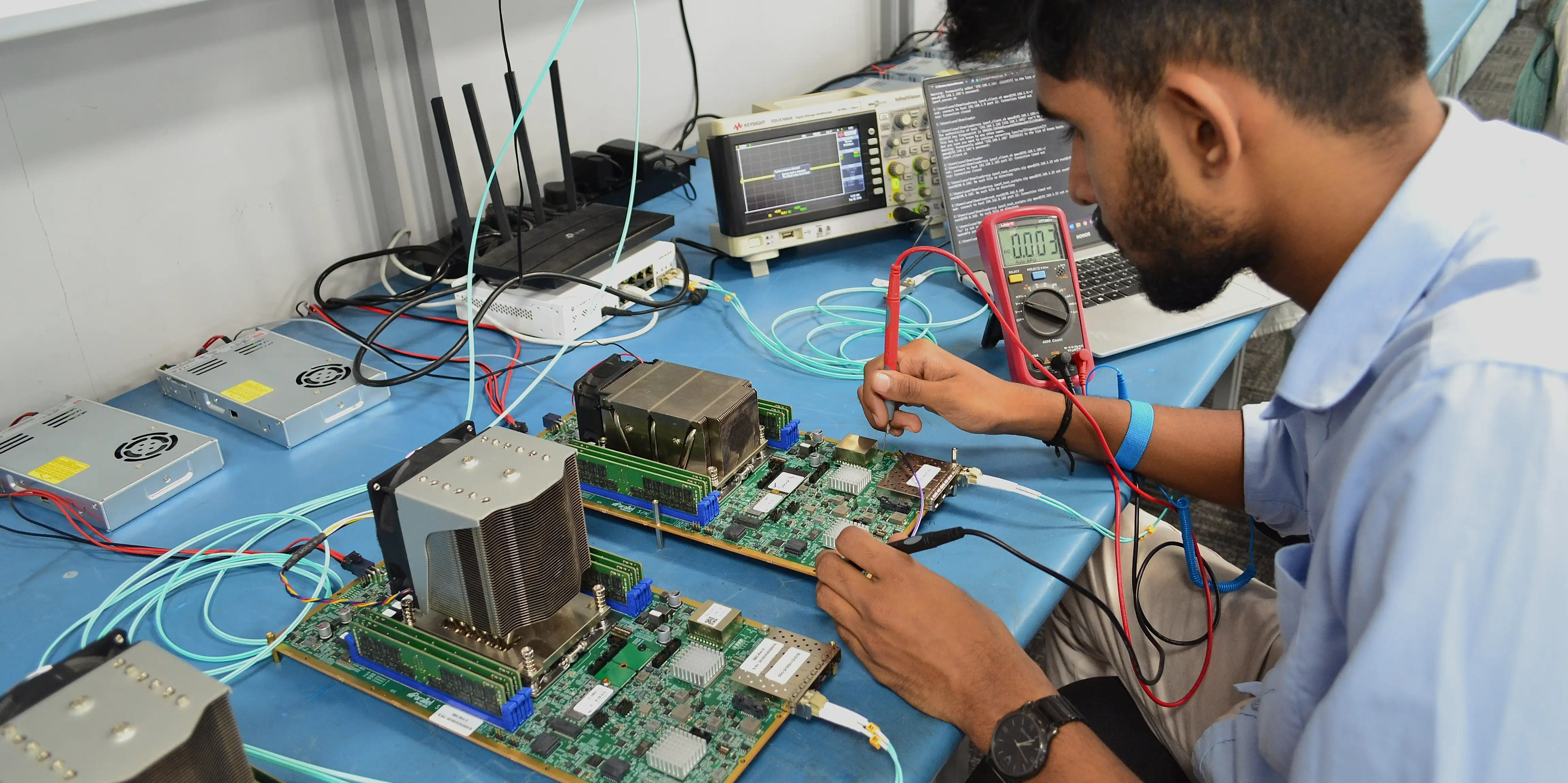
For 29 years Qmax Systems has designed the digital hardware at the center of AI compute, enterprise servers, telecom infrastructure and high-bandwidth networking. Our engineers take a system from requirements and architecture through schematic design, signal and power integrity simulation, multi-layer PCB layout, thermal and mechanical co-design, board bring-up and compliance, to a production-ready release package.

We work where signaling physics decides whether a board functions at all — DDR5 and LPDDR5X memory subsystems, PCIe Gen5 and Gen6, 112G SerDes channels, and PCIe carried over an optical fabric. On those interfaces, routing rules are derived from simulation before the first net is placed, not corrected after the board comes back.

Every program is owned by senior engineers from architecture through to manufacturing handover, so there is one accountable team rather than a chain of vendors. You own 100% of the resulting intellectual property at every milestone.
Architecture & Feasibility

System architecture, silicon selection, power tree and target BoM

Schematic Design

Capture, library work and component lifecycle engineering

SI, PI & Thermal Simulation

Pre- and post-layout analysis that sets the routing constraints

PCB Layout

Multi-layer and HDI layout to controlled impedance targets

Thermal & Mechanical Co-Design

Air, conduction and liquid-cooled paths designed with the board

Bring-Up & Validation

Power sequencing, debug, link characterization and DVT

Compliance Readiness

EMI/EMC and safety addressed during design, not after it

Production Transfer

DFM, DFA and DFT release package and test jig development

Digital Hardware We Design

AI Compute & Composable Infrastructure

Disaggregated PCIe resource chassis, GPU pooling platforms, and the optical fabric hardware that connects them across the rack.

  • PCIe-over-optical fabric interface cards with co-packaged optics
  • Composable GPU and NVMe resource chassis with runtime attach and detach
  • High-lane-count PCIe Gen5 switch fabrics and hot-plug control
  • 100 A-class multiphase GPU power delivery networks
  • Direct-to-chip liquid and hybrid air/liquid thermal co-design

Enterprise Compute & Server Platforms

Multi-socket x86 and ARM server motherboards, single-board computers, and the platform management hardware around them.

  • Intel Xeon, AMD EPYC and Ampere Altra platform design
  • Multi-channel DDR5 and LPDDR5X memory subsystems
  • BMC, power sequencing and platform management hardware
  • OCP-compliant, 1U/2U rackmount and rugged industrial form factors

Telecom, O-RAN & Networking

Carrier-grade line cards, switch fabrics, network interface cards and Open RAN distributed units for operator and hyperscale networks.

  • O-RAN Distributed Units with GNSS and OCXO timing synchronization
  • 25G, 100G and 400G Ethernet line cards and network interface cards
  • Terabit-class switch fabric and backplane hardware
  • QSFP-DD, OSFP and SFP28 optical port design

FPGA & Hardware Acceleration

Custom FPGA platforms and accelerator cards where the workload needs deterministic latency or hardware offload.

  • AMD Xilinx and Intel Altera FPGA platform design
  • Multi-gigabit SerDes breakout and channel design
  • High-transient core-rail VRM design
  • Real-time DSP, edge inference and I/O acceleration

High-Density Storage & Data Fabric

NVMe backplanes and composable storage hardware sitting on the same fabric as the compute that consumes it.

  • Multi-drive NVMe backplane and midplane design
  • PCIe Gen5 storage expansion with hot-plug control
  • Low-latency data paths for GPU-attached storage
  • High-capacity composable storage enclosures

Edge AI & Embedded Compute

Compact, power-constrained compute platforms running inference and control outside the data center.

  • ARM SoC platforms — NXP i.MX, Rockchip and Qualcomm
  • Multi-camera MIPI CSI-2 aggregation and 4K video paths
  • Fanless and conduction-cooled rugged designs
  • Industrial IoT, robotics and machine vision hardware

Silicon and Interfaces We Work With

DomainSiliconInterfaces & Data Rates
AI & Server ComputeAmpere Altra, AMD EPYC, Intel Xeon; NVIDIA and AMD acceleratorsPCIe Gen5 (32 GT/s), PCIe Gen6 (64 GT/s), CXL, DDR5 and LPDDR5X to 8533 MT/s
Composable & Optical FabricPCIe switch fabrics, retimers, co-packaged optics modulesPCIe over single-mode fiber, high-lane-count switching, runtime hot-plug
Networking & TelecomBroadcom, Marvell, Microsemi; Silicon Labs timing and clocking25G / 100G / 400G Ethernet, 112G PAM4 SerDes, QSFP-DD / OSFP / SFP28
FPGA & AccelerationAMD Xilinx, Intel AlteraMulti-gigabit SerDes, LVDS, high-bandwidth memory interfaces
Embedded & EdgeNXP, Rockchip, Qualcomm, ST, Texas Instruments, Microchip, NordicMIPI CSI-2 / DSI, USB 3.x and USB4, LPDDR4/5, Gigabit Ethernet
Power & Platform ManagementInfineon, Analog Devices, Texas Instruments, MPS; ASPEED BMCMultiphase VRM, hot-swap control, I²C / SMBus, PMBus

Applications & Real-World Project Experience

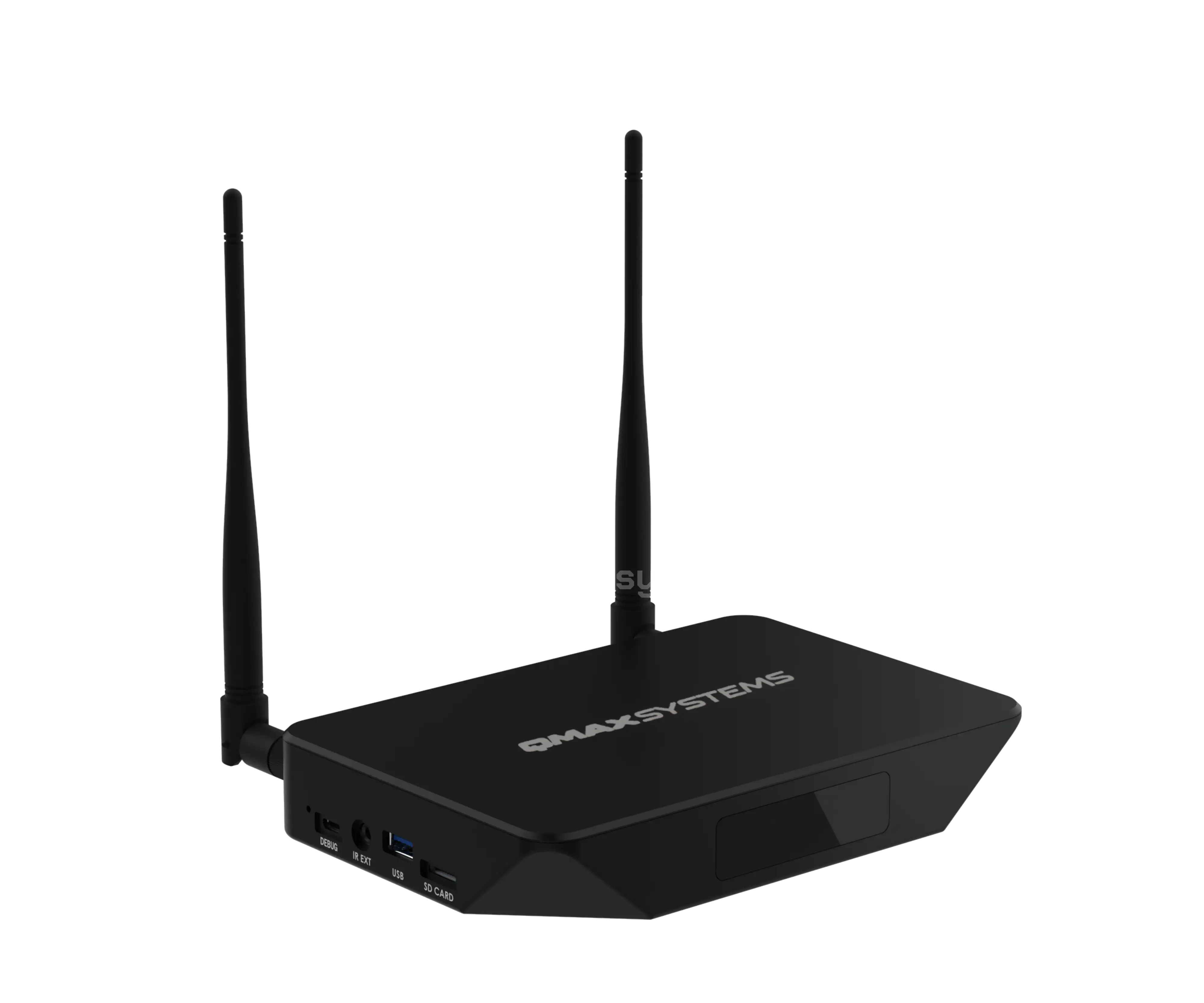
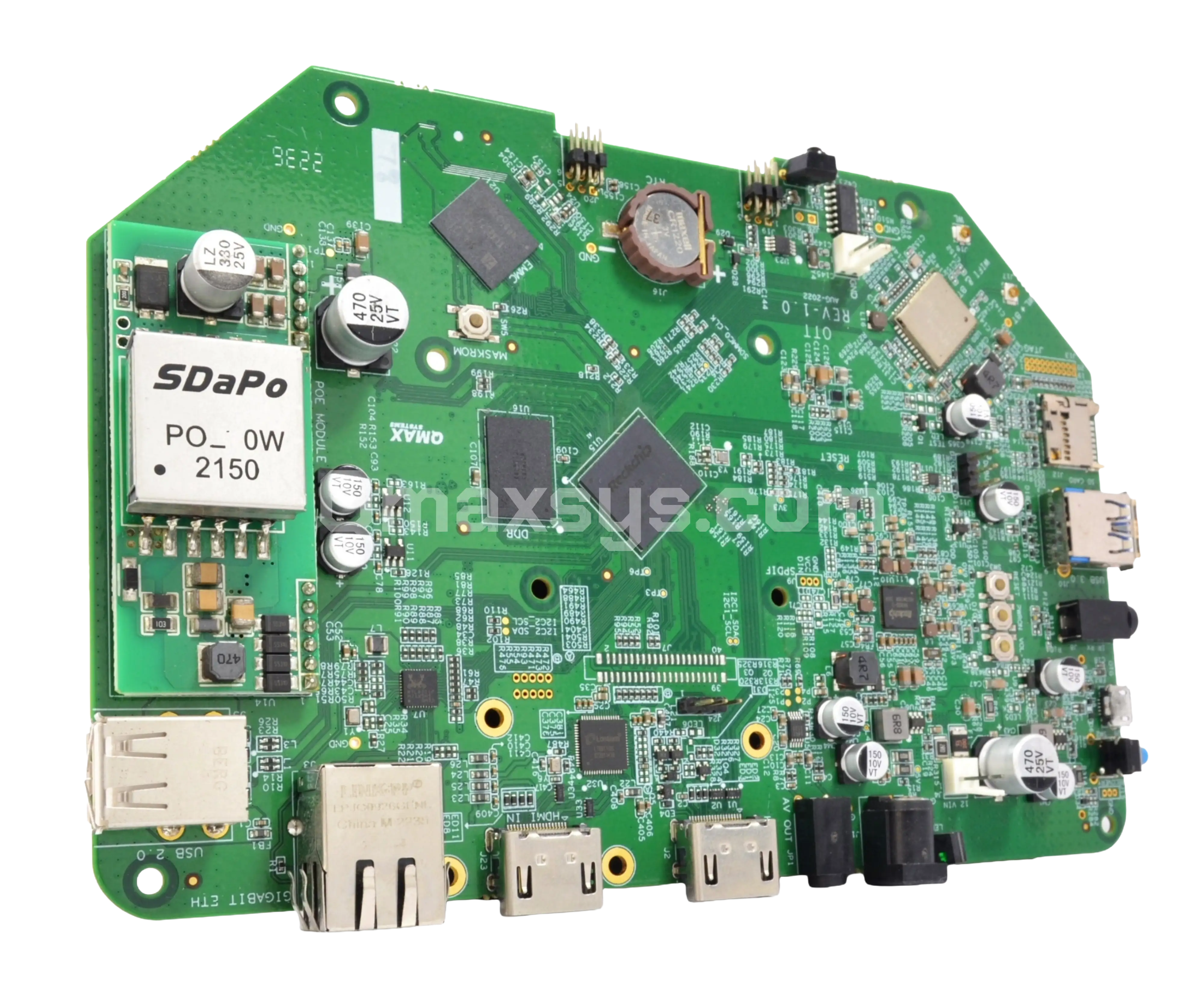
The Rugged Android Digital Signage Player is a fanless, wall-mountable media appliance powered by the Rockchip RK3566 SoC. It renders live HDMI video alongside managed signage content in picture-in-picture on 4K displays. Housed in an IP54-rated aluminum enclosure, it supports PoE and fully operational OTA updates.

View case study

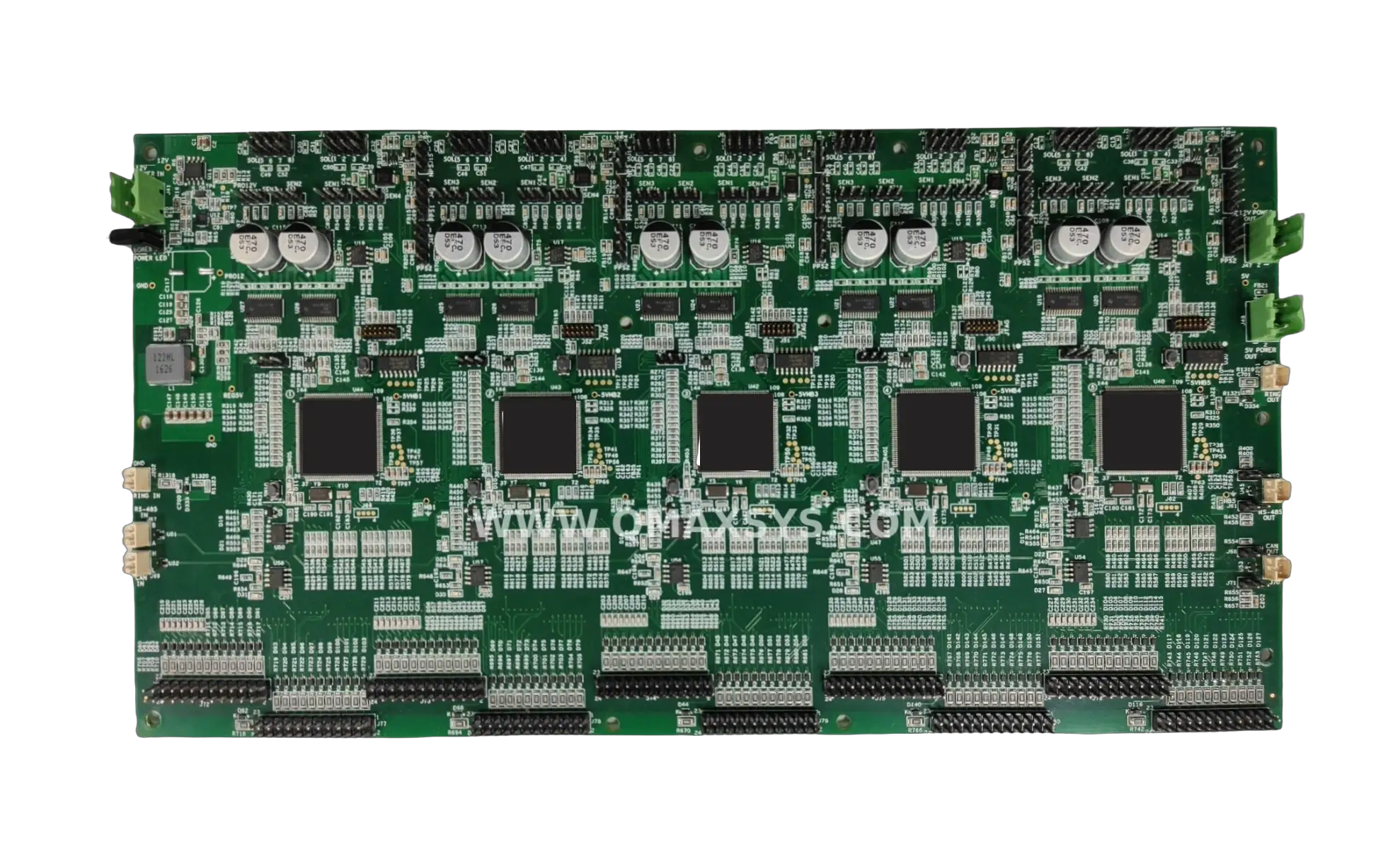
The Industrial I/O Controller is a high-density digital I/O card supporting 240 discrete DIO channels, built around five synchronized automotive-grade microcontrollers. Each channel is CAN FD-configurable from a PC without reprogramming firmware. It integrates analog and pressure/switch inputs, status indicators, and cascading capability to scale I/O count for larger assemblies.

View case study

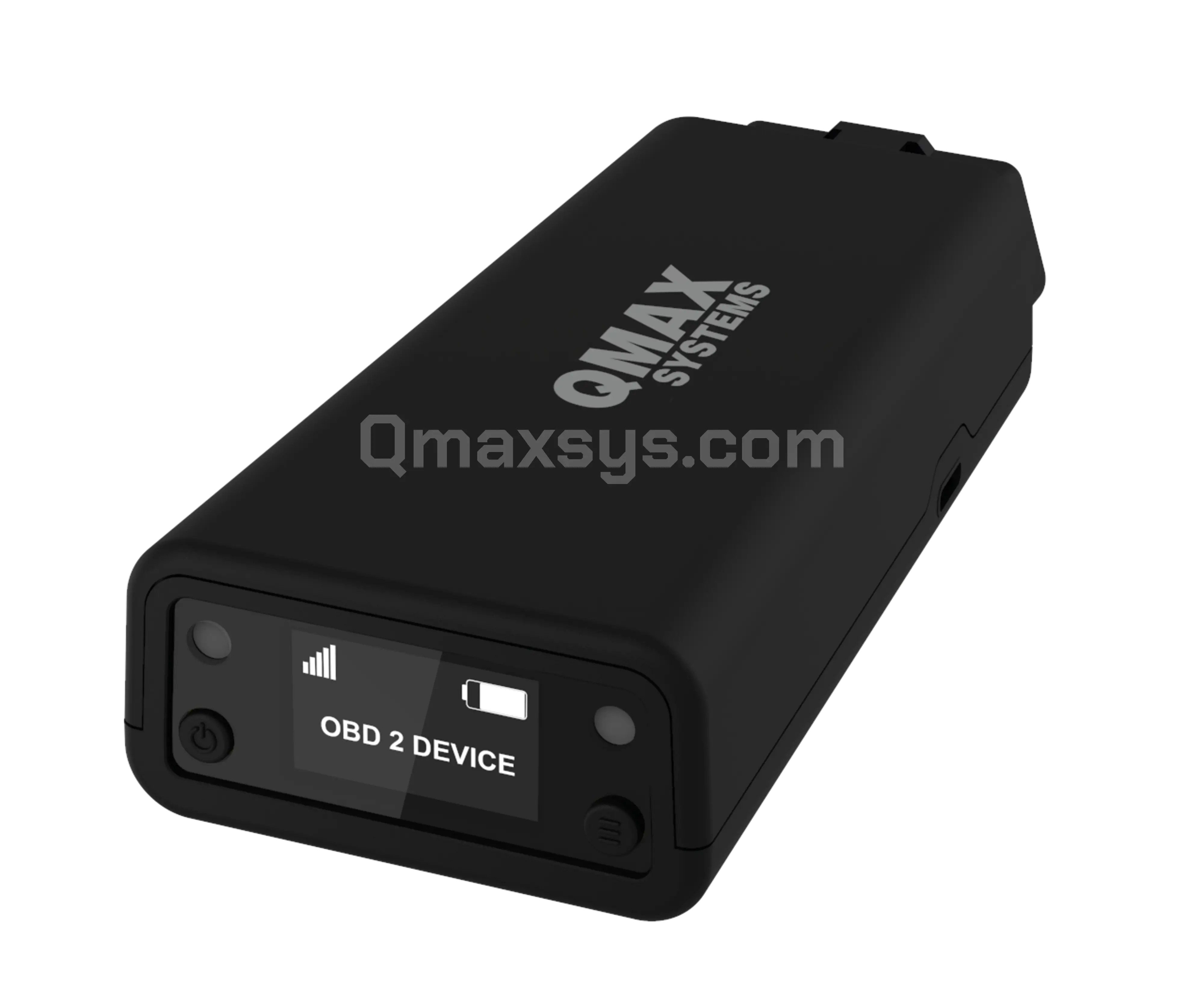
The OBD-II Diagnostics Device is a rugged, handheld tool for automotive service environments. It reads VIN, mileage, and Diagnostic Trouble Codes in real time via embedded Linux, Wi-Fi, BLE, LTE and GPS. It auto-detects vehicle protocols using the STN2120 IC and meets FCC, RoHS, and CP65 compliance.

View case study

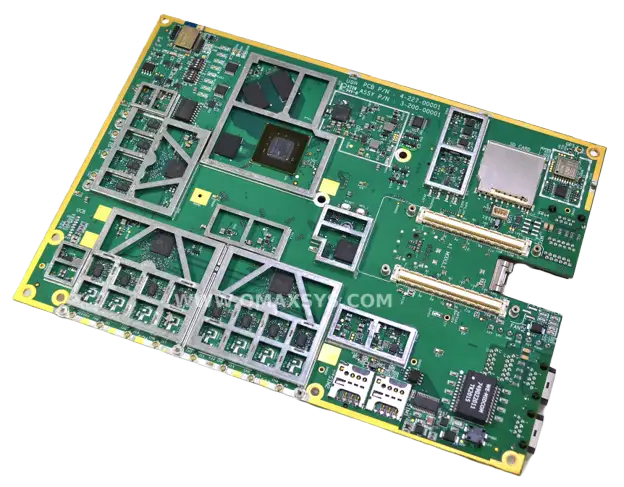
A GNSS and 1PPS-synchronized single board computer serving as a data base station's compute core, built around an Ampere Altra Q64-26 processor with an ASPEED AST2600 BMC. A Broadcom BCM57504 network processor drives four 25G SFP28 links, while onboard GNSS/OCXO timing synchronizes the radio network across a 16-layer, 4,200-component board.

Digital Signage Player - image 1 of 7
Click to zoom
1 / 7

Why Choose Qmax for Digital Hardware Design?

29 Years of Digital Hardware Heritage

Qmax Systems has been designing digital hardware since 1997, pairing engineers with decades of system-level insight against current high-frequency practice across PCIe Gen6, CXL and 112G PAM4. Our digital hardware engineers average 12+ years across AI infrastructure, telecom and O-RAN, embedded edge computing and industrial systems.

True Single-Roof Synergy

Fragmented delivery models create handoffs where signal integrity and thermal problems hide. Qmax houses hardware architects, PCB layout designers, SI/PI analysts, mechanical engineers and firmware developers in one delivery center, working the same program in real time rather than passing files between vendors.

Simulation and Validation In-House

Pre- and post-layout signal and power integrity analysis in Cadence Sigrity and Ansys SIwave and HFSS, followed by physical validation in our own lab on high-bandwidth oscilloscopes, spectrum analyzers, thermal cameras and temperature cycling chambers.

100+ Verification Gates and a Zero-Error Culture

Complex digital hardware punishes trial and error. Qmax works to an internal framework of more than 100 schematic verification checks, component derating rules and power-sequencing gates, refined across 29 years of production programs and applied before a netlist is locked.

Cross-Domain Best Practice Transfer

We carry engineering practice across industries. Low-noise techniques from medical instrumentation protect sensitive buses on dense digital boards; environmental and reliability discipline from aerospace and industrial programs hardens compute hardware; and DFM practice from volume production keeps yields predictable at scale.

Compliance Designed In

EMI/EMC, safety and environmental requirements enter the design as architecture constraints - isolation, clearances, filtering, return paths and shielding - so that certification confirms what the design already achieves. Qmax operates ISO 9001 and ISO 13485 certified quality systems.

Get a Complimentary Consultation with Our Digital Hardware Experts.

1-hour session with a Qmax Systems Senior Hardware Architect. Practical, engineering-driven - no sales pitch.

Schedule Consultation

Case Studies

More Case Studies

Frequently Asked Questions

What high-speed design standards does Qmax Systems support?
Qmax Systems specializes in the latest high-speed communication standards, including PCIe Gen 5/6, DDR5, and 112G SerDes. The Qmax Systems engineering team utilizes advanced simulation tools - full-wave EM, IBIS-AMI channel modeling, and target-impedance methodologies - to ensure signal integrity (SI) and power integrity (PI) for data rates exceeding 100 Gbps.
Can Qmax Systems design custom hardware for AI and Deep Learning?
Yes. Qmax Systems develops High-Density AI GPU Compute Servers tailored for massive parallel processing workloads. Our designs focus on robust Power Delivery Networks (PDN) and advanced thermal management strategies required to sustain the performance of high-TDP NVIDIA and AMD GPU clusters used in AI training and inference.
Does Qmax Systems provide O-RAN and 5G infrastructure hardware?
Absolutely. Qmax Systems is active in the O-RAN ecosystem, designing Distributed Units (DU) and specialized Network Interface Cards (NIC). We help telecom providers and private network operators deploy scalable, open-architecture hardware for 4G and 5G rollouts.
What processor architectures does Qmax Systems work with for server motherboards?
Qmax Systems' expertise spans the leading x86 and ARM-based enterprise architectures, including Intel Xeon, AMD EPYC, and Ampere Altra CPUs. We design custom server motherboards and Single Board Computers (SBCs) in OCP-compliant, 1U/2U rackmount, and rugged industrial form factors that meet specific environmental and compliance requirements.
Does Qmax Systems handle complex, high-layer count PCB designs?
Yes. Qmax Systems engineers are experienced in high-density interconnect (HDI) technology, regularly managing 20+ layer PCB stacks with blind and buried microvias for DDR5, PCIe Gen6, and 112G SerDes routing. We ensure every design is optimized for DFM (Design for Manufacturing) and DFT (Design for Test) to streamline the transition to mass production.
What is included in the 1-hour complimentary consulting session?
During this session, you will speak directly with a Senior Hardware Architect from Qmax Systems. We can review your block diagrams, discuss thermal or signal integrity challenges, provide high-level architecture validation, or help refine your hardware roadmap to reduce time-to-market. We can sign an NDA if required.
How does Qmax Systems protect customer design data and intellectual property?
Qmax Systems treats every engagement under strict IP protection: NDAs signed before any technical discussion, dedicated secure project workspaces, role-based access control to design files, and customer-owned IP at every milestone - schematics, layouts, BoMs, and firmware. Qmax Systems engineers never reuse or repurpose customer IP across other client engagements.
How does Qmax Systems ensure signal integrity and power integrity in high-speed digital designs?
Qmax Systems' SI/PI methodology combines full-wave 3D electromagnetic simulation, IBIS-AMI channel modeling for DDR5 and SerDes interfaces, and target-impedance PDN design backed by simulation-driven decoupling. Every high-speed design - DDR5, PCIe Gen5/Gen6, 100GbE, 112G SerDes - is validated against compliance margin before fabrication, eliminating costly re-spins.
Contact Us